
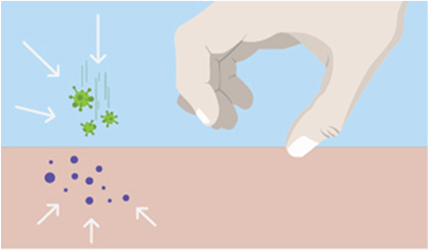
INFLAMMATION LEADS TO ITCH
Immune cells within the inside layers of your skin send inflammatory signals to the surface, causing the itchy rash.
Eczema is used to describe many kinds of itchy rashes. 31.6 million people in the U.S. live with some form of eczema. Over 80% of those, or 27.6 million people, have atopic dermatitis (AD)—the most common type of eczema.
Atopic dermatitis is more than a skin condition. It's a chronic, inflammatory skin disease. While the exact cause of atopic dermatitis is unknown, it is caused, in part, by an overactive immune system. Other contributors include genetics, a weakened skin barrier, the microbiome (the bacteria on your skin), and environmental factors.
An overactive immune system can cause excess inflammation inside the body leading to symptoms you experience, such as:
Even when you have no visible rash, the underlying inflammation may still be active beneath your skin, waiting to flare.
Take a deeper look at what’s going on underneath the skin by watching the video below.
You may be actively trying to manage your symptoms or doing everything you can to keep your symptoms from coming back. However, the interplay between your overactive immune system and your weakened skin barrier can keep you trapped in the “itch-scratch cycle.”
Immune cells within the inside layers of your skin send inflammatory signals to the surface, causing the itchy rash.
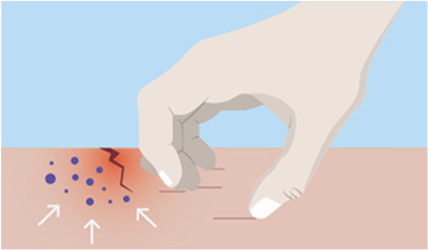
Scratching breaks down the outer layer of the skin, which allows germs, viruses, and allergens to get in.
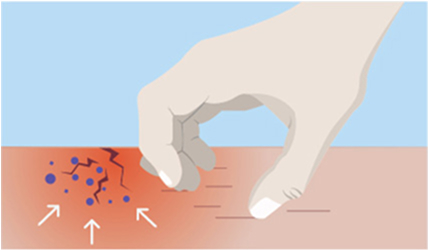
Worsening of the itch and scratch further breaks down the skin barrier, leading to continued inflammatory response and causing the itch-scratch cycle to continue.
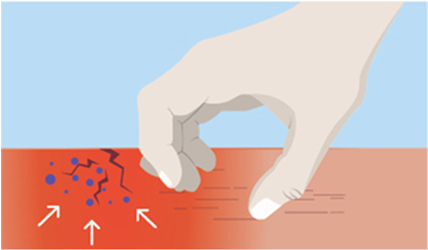
In response, the immune system continues to send signals to the surface, and worsens the itch and rash.
A few common factors that can cause flare-ups include:
External triggers can worsen inflammation inside your body and cause your symptoms to flare up. Even when you're not having a flare-up, inflammation under the skin is usually present and can affect skin over time. That is why it's a good idea to find a specialist to help diagnose your symptoms.
This chronic and recurrent inflammatory skin condition is characterized by unbearably itchy skin and dry, irritated rashes. It is the most common form of eczema, affecting approximately 7% of adults and 13% of children in the U.S.
Occurs when an allergen or irritant such as soap, certain fabrics, perfume, or jewelry touches the skin and causes a reaction.
Appearing mostly on the hands and feet, these fluid-filled blisters are typically caused by sweat, water, or nickel exposure.
While not as widespread as AD, this form of eczema is characterized by extremely itchy patches of skin that become thick and leathery when scratched.
Coin-shaped areas of itchy, irritated skin that appear mostly on hands, arms, chest, or legs.
More commonly called cradle cap in infants or dandruff in older children and adults, it appears as red, greasy, swollen skin and white, crusty flakes in oily areas of the body.
This skin condition is characterized by inflammation, itching, swelling, and discoloration, due to fluid buildup in the lower legs as a result of poor circulation.
People with eczema often have other chronic conditions:

20% of adults and 50% of children with severe eczema also have asthma.

Children are 6 times more likely to develop a food allergy.

Adults are 2 to 4 times more likely to have hay fever and food allergies.
*These statistics are representative of U.S. population.